

What is growth?
Quick Q&A
Why is the government so keen on economic growth?
Governments believe that by increasing financial activity in the economy they can increase the tax take. This allows them to spend more on voters’ priorities. It’s a form of “trickle down economics”: as the rich get richer their taxes and the money they spend will find their way down to everybody else.
And how’s that going?
Actually the tax take has increased, a lot. But that affects ordinary people more than the rich. And meanwhile the state of public services, and the levels of social deprivation, have only got worse. No serious economist believes any more that trickle down economics works, but governments still seem to think it will solve everything.
So growth isn’t working? Why is that?
Wealth and money are not the same thing, and the narrow focus on increasing money turnover (GDP) means we’re getting the wrong sort of growth. If the government wants people to feel wealthier in a real sense it needs to focus on growing directly the things that most improve the quality of people’s lives.
OK, so how would it do that?
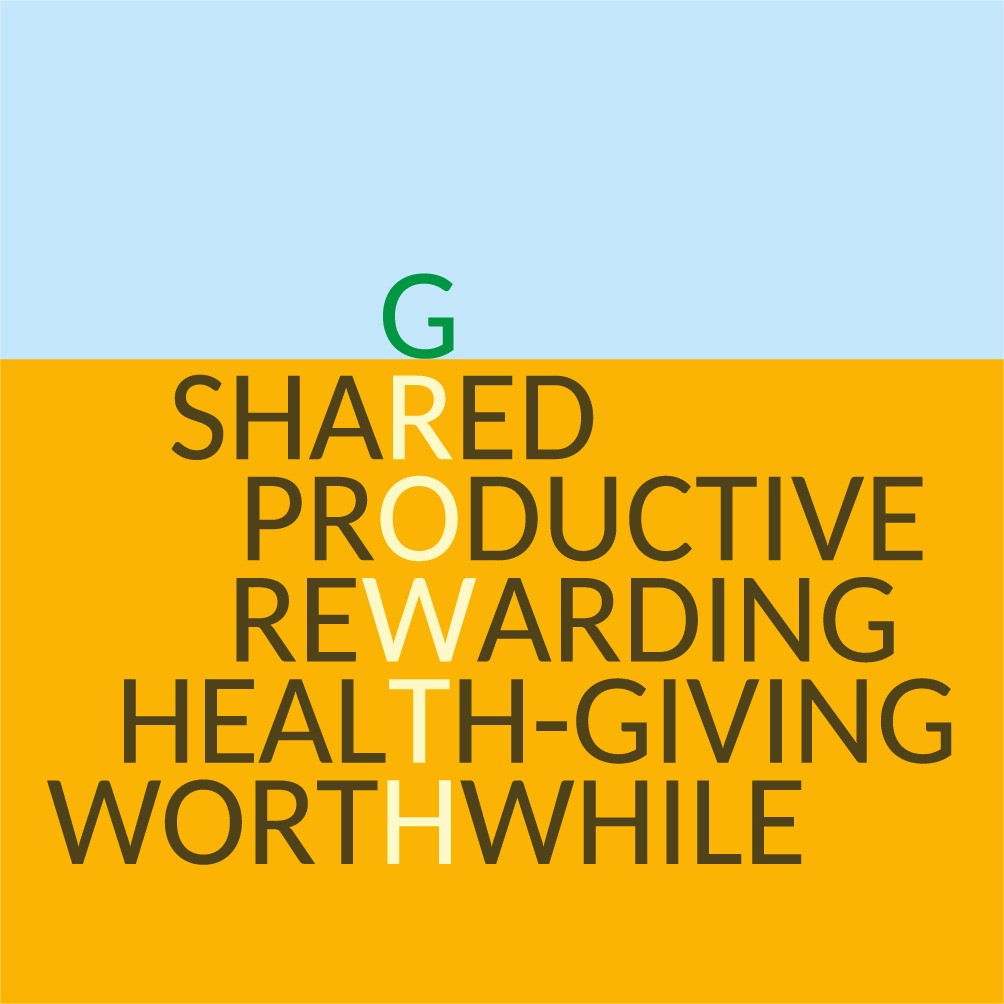
The first step is to target a different sort of growth. Instead of measuring money turnover (GDP), the government needs to focus on the quality of people’s lives. Do they have enough to eat? Are they healthy? Are they educated? Are they happy? Are they well and affordably housed? Do they have productive, rewarding, worthwhile work? This is the sort of growth that people will notice, and we won’t achieve it by (for example) building a third runway at Heathrow Airport.
A fuller picture
All governments pursue a “growth” agenda, but end up trying to grow the wrong things.
Growth means an increase in the amount of wealth that an economy produces. But that word “wealth” is tricksy. Wealth and money are not the same, as this image shows [LINK to wealth word image]. Money is an input that can help us to create wealth, but the important thing is what we do with it. It’s the combination of money and our own efforts that creates wealth.
To visualise the role of money in economic growth, think of rain falling on a vegetable patch. The right amount of rain, in the right place, at the right time, will enable plants to grow. But too little rain will cause them to wither and too much rain will wash them out.
It’s not hard to see the damage caused by too little money. It is all around us in the form of food banks and collapsing public services. The damage caused by too much money, on the other hand, is harder to spot, because it is often not recognised as damage at all.
The main symptom of too much money is rising asset prices. In this case “asset” means things like land, house and share prices, and other investment-type categories such as bonds, gold and fine art. We are generally encouraged to think of high house and share prices as a “good thing”.
High house prices are obviously not a good thing for people who are renting or would like to buy a home, but they are actually not good for the majority of homeowners, either. That’s because they tie up an enormous amount of money that could be used much more productively (and pleasantly). Think of all the holidays you could have if homes cost only four times your salary, as they did a few decades ago. Now they cost eight times a typical salary, and far more than that in the most expensive areas.
Asset prices rise when the rich have more money than they know what to do with, so they bid up the prices of investments, which makes things more expensive for the rest of us. Rising asset prices, therefore, are not “growth” but shrinkage - we get less for our money.
The right amount, in the right place, at the right time, is the key to a successful economic policy because once money has accumulated in the wrong places it is notoriously hard to shift. In this case the wrong place is the bank accounts and investments of people who are already amply rich, for whom the money has no practical use. But people are understandably attached to what they already have, so taxing the wealthy is always difficult. Taxing them enough to achieve real change for the rest of us is almost impossible.
It would be much easier in political terms to prevent money from concentrating so easily in the hands of the rich than it is to take it away from them. After all, money originates with the government, as this image explains, [LINK to Making Money image] so the government has much more power than it realises to manage where it goes.
At the moment the government measures growth purely in terms of money turnover in the economy (GDP), irrespective of how useful or productive that activity is. So it prioritises activities that involve the greatest movement of money, regardless of their social or practical usefulness. That policy invariably favours the rich, who have more money to move around.
The starting point for real growth, however, is to get the money to where it can most effectively support people to improve the quality of their lives. Then measure the quality of those lives to see if it is growing. Looked at in this way, a third runway for Heathrow or the development of the Rosebank North Sea oilfield would not be a priority. The money proposed to be spent on these projects could be much more rapidly and effectively directed towards objectives such as alleviating poverty, providing better healthcare and building more affordable homes.