

Taking, not making
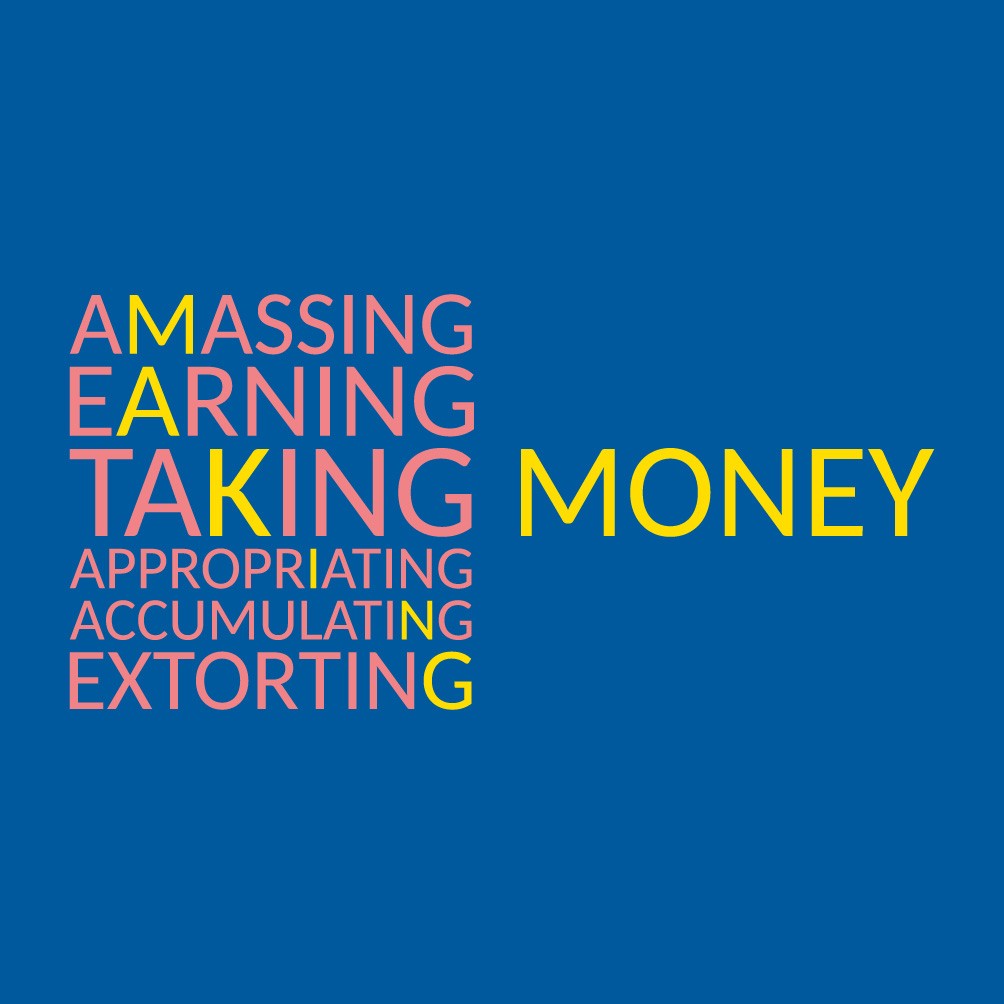
Only a government can make money. So a government policy based on the idea that businesses “make money” is bound to fail. Money has no inherent value. It exists only because governments have brought it into being. Everybody else is using the money in the economy either to create real wealth or to accumulate more money for themselves. Either way, we’re all forced to compete for the money that the government has put into the system. So where and how the government puts in that money makes a huge difference.
Money has no inherent value? What does that mean?
All money these days is “Fiat” currency. Nothing to do with an Italian car - fiat means “let it be so”. So it’s not connected to gold or anything like that. It only has value because the government says it does and makes us use it.
How do governments create new money?
Governments put new money into the economy when they spend it (or allow banks to lend it), and they take money out in tax and various other ways. So they’re constantly creating and destroying money. The question is, who is getting the newly created money, and from whom is the destroyed money being taken away?
And who is…?
In general, new money finds its way into the hands of the already rich, because when they get even richer it looks as if the economy is doing well. But destroyed money comes from ordinary people, through income taxes, VAT, etc. It’s a long time since UK tax policy has been willing to target the rich.
So what’s the solution? Wealth taxes on the rich?
That’s one way, but prevention is better than cure. Since governments control the flow of money into the economy, it would be better to do so in a way that directs it towards ordinary people, rather than encourage the already rich to get their hands on even more.
A fuller picture
Since 1972, when the US abandoned the gold standard, and in most cases for much longer than that, the world’s currencies have been “fiat” currencies. Fiat is Latin for “let it be so”, and a fiat currency has value only because a government says that it does.
Because it is not connected to anything of physical value, there is no limit to the amount of money a government can create. So managing the value of money is an important government responsibility. The key is to ensure that the correct amount of money is in the economy at any time.
What is the correct amount? To answer this we need to understand what money is for. Since money has no physical value it shouldn’t be thought of as wealth as such. It is more accurate to describe money as a tool that helps in the creation of wealth. It allows people more easily to trade goods, materials and their skills so that they have what they need to produce real wealth - the food, shelter, clothing and myriad other things that will improve the quality of their lives.
The correct amount of money in the economy, therefore, is the amount that will allow as much of that real wealth as possible to be created. That doesn’t mean, however, that making more money available will produce more. Plenty of real wealth can be produced with very little money, and if too much money is available people may stop producing wealth in the expectation that they can simply buy it from others.
That’s why too much money causes inflation. People try to buy, rather than produce, the wealth they need, so prices go up. Too little money, however, is also a problem, because it stops people from producing. That is why the UK’s austerity policies of the last 15 years have been so disastrous, both economically and politically.
Because money has no real physical value, but mostly exists as numbers in a computer, the government doesn’t actually keep it or bank it. Instead it simply creates new money through spending (schools, NHS, roads, armed forces, pensions, etc). In the same way, the money it takes out through taxation (income tax, VAT, fuel duty, etc) is simply binned. The same thing happens when the government sells assets, such as publicly-owned businesses or land: the money is just cancelled. And this also happens when the government borrows money by selling bonds, or gilts. The borrowed money disappears and will be created anew when the time comes to pay it back.
Through these and other methods the government is constantly balancing the amount of money in the economy. The idea is to keep it as active as possible but not to tip it over into inflation. The job is made harder, however, by the other way in which money enters the economy, which is via commercial bank loans.
The government allows private commercial banks to lend money that they do not have, and in doing so new money is created. This money is then cancelled when the loan is paid off. The government could quite easily control to whom and for what purpose this money is lent, in order to ensure that it is going towards activities that will create real wealth. But because it doesn’t control lending in this way, much of this new money goes into higher land and house prices, higher share prices and other forms of financial trading activity, where no real wealth is created.
So although we talk of people “making money”, this phrase cannot be used to describe activities in the economy, because only the government (and the banks if the government lets them) can actually make money. Instead of making money we would do better to speak either of creating real wealth (using money to help produce something of real value) or accumulating money (without adding to the total of real wealth being produced). Some activities, of course, will combine elements of both of these.
This provides an important reminder that the money that anyone makes use of or accumulates is part of a finite amount at any given moment, and might be more usefully made use of in some other way. This is particularly true, of course, of money for which people (generally the very rich) have no use. Every pound salted away in a rich person’s bank account is a pound that is not being used by a hungry family to make a meal.
It is also a reminder that the government can and does make money. This gives it an enormous responsibility to make sure that the money is going wherever it is most effective in creating real wealth. The family of hungry children would be one such place. The offshore bank account of a wealthy investor would not be.