

Sharing plates
A little equality goes a long way
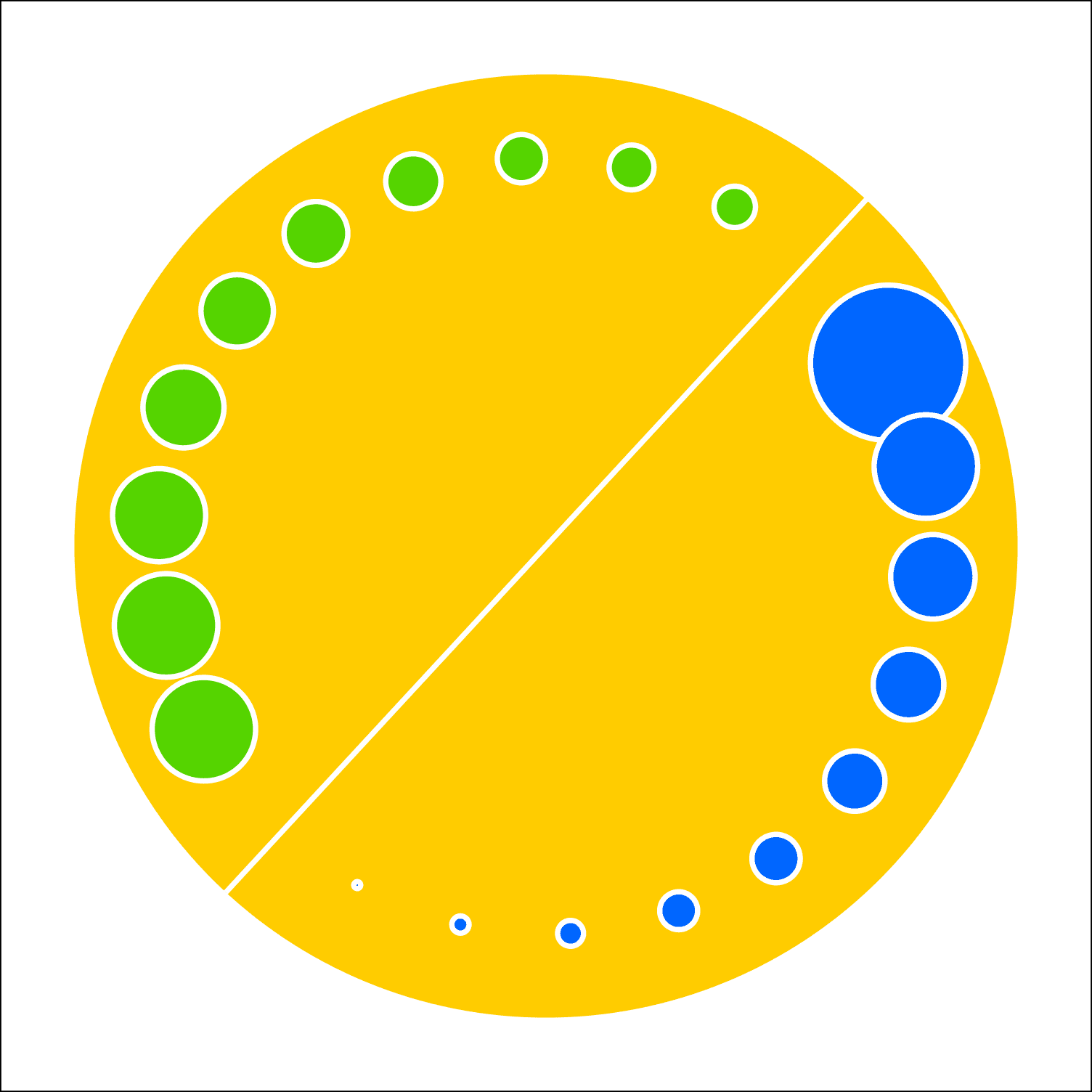
The image shows the wealth of each 10% of the population of Grest Britain, in the blue circles. The circles in green show the effect of distributing the additional wealth of the top 10% equally among the lower 80%.
Wealth inequality reduces capacity in the economy to produce new wealth, while increasing the costs for government. Even a small change would make a big difference.
This image shows, in the blue circles, the average household wealth in money terms for each 10% (or decile) of the population in Great Britain. This includes property (mostly housing), pension funds, cash, financial investments and belongings (such as cars). The average for the top 10% is £2.5 million. For the bottom 10% it is under £5,000.
There is a big jump between the top 10% and the next group down (the 9th decile). This is largely caused by the presence in the top group of a relatively small number of extremely wealthy people (the top 1% or 0.1%).
The circles in green show the effect of reducing the wealth of the top 10% to the level of the 9th decile, with that wealth being redistributed equally across the remaining 80% - the 1st to the 8th deciles. Although the pattern remains unequal the distribution is smoother and the extremes are much reduced. The bottom 10% now has nearly £180,000 of wealth in money terms.
The image shows that extremes of inequality are much more problematic than inequality itself. The concentration of money-wealth at the top end is the primary reason why so many families are struggling to get by. Redistributing this wealth through taxation is extremely hard to do. What is needed is a redesign of the economic system so that money doesn’t concentrate so easily in the first place.