What is Economics?
Most people say they don’t understand economics. In fact, almost everybody does. It’s finance that’s the problem.
Share this image
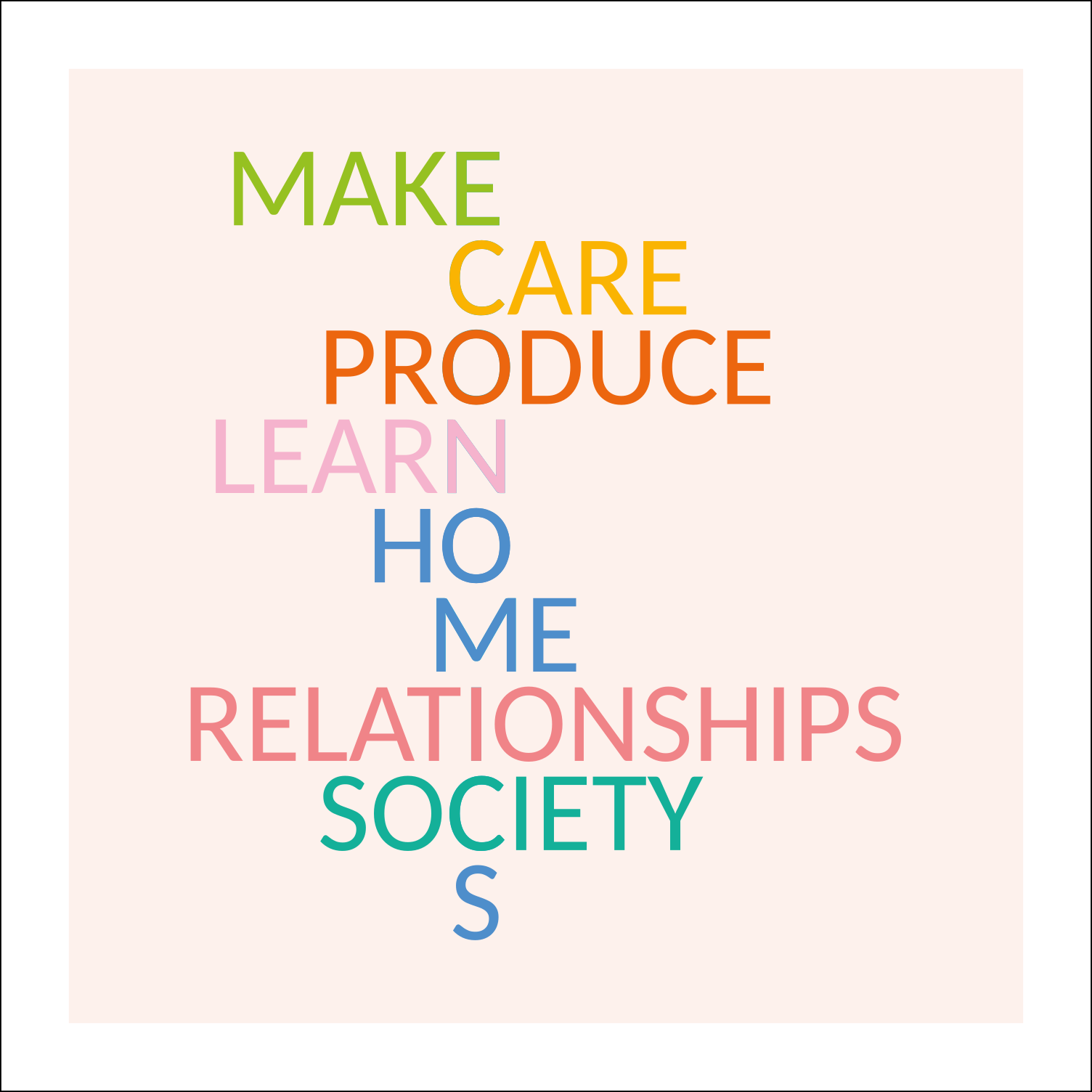
Economics is the process of wealth-creation – producing the things that we value to maintain and improve the quality of our lives.
Most of all, that means making stuff. Growing and preparing food, building houses, stitching clothes, making furniture.
It also means caring for one another and ourselves. Healthcare, childcare, education, care for the elderly, self-care – all of these things are economically highly productive. Even getting a good night’s sleep is an economic good!
Productive is the key word here. Any activity that adds to the totality of wealth – rather than just transferring it from one person to another – is an economic activity.
Teaching is a productive activity, but then so is learning. And learning is a broad concept. It could be studying, reading, watching a film, taking exercise – everything that leads to an improvement in mind and body.
The word “economy” derives from the Greek word for household, and an economy is simply a social grouping of people who organise themselves to sustain their lives. So a successful economy is built on good relationships. Family relationships, trust relationships, co-creative relationships.
Economics is something we all engage in, for much of our time. Whether we’re cooking a meal for the kids, or designing a nuclear power station, we know what productive activity looks like. So it’s not hard to understand.
That seems simple enough. So why do we think it’s hard to understand?
Finance! That’s the problem. Macro-economics, inflation, interest rates, financial trading, futures, share prices, exchange rates – these are all about money and finance, and the “science” around them is much disputed and quite complicated. But the real economy is mainly about production, not money. Much wealth can be produced without any money at all.
So how does money fit into economics?
Money is an important tool for producing real, useful wealth. It allows people to obtain what they need in order to be productive themselves. But if we focus exclusively on money then we’re missing the point. Money isn’t wealth. It’s only a tool for producing wealth.
Maybe only a tool. But still a pretty important one.
Yes, but would you measure a table top by the size of the saw you used to cut it? That’s what governments do, measuring wealth creation in terms of the movement of money (GDP). And that’s why money, rather than real production, plays such a dominant role in economic policy-making.
So what’s the way forward? Seems a big ask to separate money from economics…
Measurement is the key. Like a recipe, a construction project or a sewing pattern, it’s important to measure the right things in the right way. When it comes to the economy, we need to measure how much real useful value we are collectively producing, not the amount of money that is changing hands.
Videos relating to this image
Postcards and T-Shirts